The road climbs out of San José almost without warning.
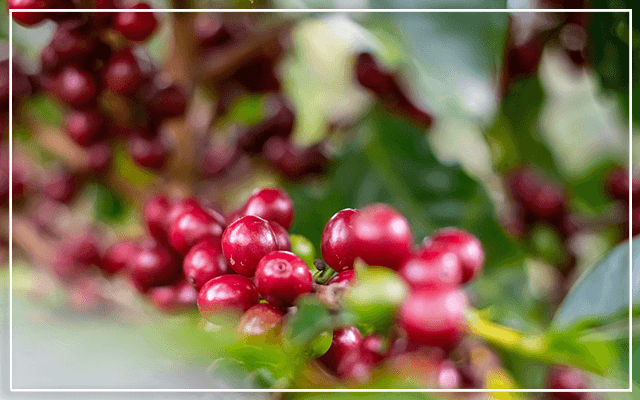
One moment, there is traffic and concrete and tangled electrical wires. The next, the city falls away into steep green mountains stitched with coffee plants. The air cools. The pace changes. Pickup trucks appear beside immaculate rows of arabica trees. Hand-painted signs advertise honey-processed microlots and fresh tortillas. The smell of damp earth replaces exhaust.
Most tourists heading into Costa Rica’s coffee country believe they are visiting farms.
What they are actually visiting is the machinery that helped build one of Latin America’s most stable democracies and, increasingly, one of its most desirable investment destinations.
A National Strategy Built on a Bean
For generations, coffee in Costa Rica was not merely an agricultural product. It was national strategy.
By the late 19th century, coffee exports had become so economically transformative that Costa Ricans referred to coffee as grano de oro, the golden grain. The industry financed roads, ports, railways, and eventually cultural institutions, including the ornate National Theater of Costa Rica, whose construction was funded through taxes tied to coffee exports.
That history still lingers in the mountains surrounding the Central Valley and Tarrazú, where coffee farms spread across volcanic slopes at elevations reaching nearly 1,900 meters. Costa Rica never became a coffee giant like Brazil or Colombia. Instead, it pursued quality with near-obsessive discipline, legally restricting production exclusively to arábica beans and becoming internationally influential through microlots, altitude cultivation, and processing innovation.
The result is a product the world increasingly pays a premium for.
The Numbers Behind the Cup
Costa Rica’s coffee exports generated US$356 million in 2024, according to UN COMTRADE data. Export prices through April 2025 rose 52% year-over-year, reaching an average of $465.65 per 60-kilogram bag, according to ICAFE, the Costa Rican Coffee Institute.
The country exports almost exclusively green, unroasted coffee — prized internationally for its traceability, sustainability standards, and consistency of quality.
The buyer landscape has also shifted dramatically. In 2024, for the first time in history, Europe surpassed the United States as Costa Rica’s largest coffee market. According to PROCOMER, Europe received 42.6% of total shipments, approximately 27,494 tons, while the U.S. imported 25,759 tons, representing 40% of total exports. That reversal reflects growing European confidence in Costa Rican coffee ahead of new EU deforestation regulations, which require that all imported coffee be certified free of links to deforestation — a standard Costa Rica already meets.
Who Is Buying, and Why
The corporate interest in Costa Rican coffee is not abstract.
Starbucks made its first-ever farm acquisition anywhere in the world here, a 600-acre property near Poás in the Central Valley, and operates a Farmer Support Center on-site advising local growers on soil health, disease prevention, and sustainable farming. The company also runs 26 retail stores in Costa Rica through its licensed operator, Premium Restaurants of America.
Café Imports, one of the United States’ most influential specialty coffee importers, has sourced Costa Rican microlots since the 2006/2007 harvest season, calling the country a model for direct buying relationships worldwide.
illycaffè, the Italian premium coffee brand with revenues exceeding €567 million, sells Costa Rica as a named single-origin product and received the first certified deforestation-free shipment from Costa Rica in March 2024, 275 bags shipped by local exporter Exclusive Coffees as part of a pilot program with the United Nations Development Programme and ICAFE. It was a quiet but significant moment: Costa Rica positioned itself at the front of the queue for European compliance, while competitors scrambled.
Other notable European buyers include Sucafina Specialty (Belgium) and This Side Up Coffees (Netherlands), both active importers of Costa Rican specialty lots, alongside UK roaster Taylors of Harrogate and Norwegian roaster Tim Wendelboe, whose sourcing relationships with Costa Rican farms carry considerable influence in the global specialty market.
When Coffee Country Becomes Real Estate
Something else is happening in these highlands beyond the harvest.
The coffee landscape itself has become the product, not the beans alone, but the lifestyle around them.
In the hills west of San José, foreign buyers increasingly search for properties with cool temperatures, mountain views, fertile land, and proximity to boutique coffee culture. Unlike the humid beach towns that once dominated Costa Rica’s tourism economy, coffee regions offer something different: permanence. Beach tourism sells escape. Coffee country sells reinvention.
The numbers reflect this shift. Foreign investment in Costa Rican property grew by more than 18% in 2024. Total foreign direct investment that year reached approximately US$4.32 billion, one of the highest figures in the country’s history, with real estate accounting for nearly 7% of that total, according to PROCOMER. Nationwide property values rose 7.8% in 2024, according to Coldwell Banker, with the strongest appreciation concentrated in Guanacaste and the Central Valley.
In mountain areas specifically, the dynamic has become acute. Foreign buyers are acquiring farms ranging from $250,000 to $1 million, subdividing the land, and reselling individual plots at significant multiples, in some cases quadrupling their initial investment within a short period.
And with arábica prices reaching near $4.30 per pound in early 2025, historic highs, coffee farms are no longer being evaluated purely as lifestyle assets. Real estate specialists working in Costa Rica’s coffee regions are reporting renewed buyer interest in farms already in production, with high-elevation properties in traditional growing zones showing the firmest pricing.
Coffee is, once again, being taken seriously as an agricultural business. But it is now also something more: a land asset class.
The Transformation of the Farm Itself
The rise of micromills, small producer-controlled processing facilities, accelerated a deeper transformation. Instead of selling cherries into anonymous commodity systems, many farmers began producing highly differentiated specialty coffees tied directly to individual farms and family names.
That shift changed the economics of land itself.
A coffee farm is no longer valued only for agricultural output. It may also function as a luxury eco-lodge, a boutique tourism business, a remote-work retreat, a branded lifestyle property, or an experiential hospitality concept attached to specialty coffee culture. In Costa Rica, tourism and agriculture increasingly blur into each other.
Today, Costa Rican coffee tours often feel less like agricultural demonstrations and more like sensory education. Visitors move through fermentation tanks and drying patios while guides explain how identical cherries produce radically different flavor profiles depending on whether they are washed, honey-processed, or naturally dried. Some farms now resemble hybrid spaces: part agricultural operation, part design-conscious hospitality experience, part sustainability seminar.
Foreigners can legally purchase titled land in Costa Rica with rights nearly identical to those of citizens, one of the reasons the country has become so attractive to North American and European buyers seeking relocation or long-term investment. The 2021 reform of Costa Rica’s Investor and Retiree Law also lowered the minimum investment threshold for foreign residency from US$200,000 to US$150,000, further reducing the barrier to entry.
Emotional Real Estate
The phenomenon is not without tension. Online discussions among Costa Ricans and expatriates increasingly reflect anxiety over housing prices, development pressure, and foreign ownership. The number of registered coffee producers has fallen nearly 46% over the past decade, with fewer than 26,000 growers remaining as of 2023/24, according to ICAFE. Smaller producers now dominate the landscape, and the pressures of land inflation, labor shortages, and a strong colón, which has reduced export revenues for growers by nearly 20% since 2022/23, are real and compounding.
Coffee country occupies a particularly symbolic place within that transformation, because it embodies the version of Costa Rica that many foreigners believe they are searching for: environmentally conscious, artisanal, unhurried, connected to land.
In other words, coffee farms have become emotional real estate.
That may explain why coffee tours linger so strongly in travelers’ memories. Volcanoes impress. Beaches entertain. Rainforests overwhelm the senses. Coffee tours explain the country, revealing how geography became economy, how economy became identity, and how identity became exportable lifestyle.
Somewhere between the smell of roasting beans and the sight of clouds hanging over terraced mountainsides, tourists and investors alike begin to understand that Costa Rica’s global image was never built solely on biodiversity or beaches.
It was cultivated.
Row by row. Harvest by harvest. Cup by cup.