
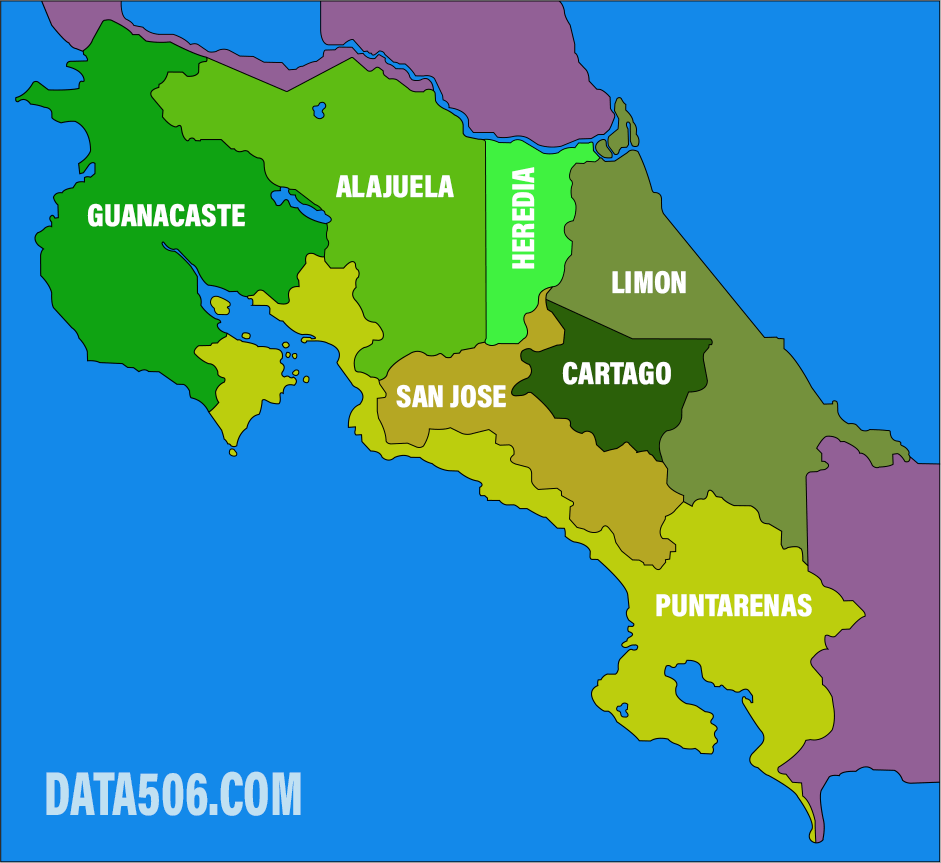

It is estimated that by 2025 Costa Rica has a population of roughly 5.3 million inhabitants. The country covers 51,179 km² and is administratively divided into seven provinces, each with distinct geography, climate patterns, and visitor relevance. Understanding these differences helps travellers prioritise time and movement realistically.
SAN JOSE
San José is the Capital City of Costa Rica and it´s the most developed area. San José is located in the center of the country, in the middle of the Central Valley, at an elevation of 1170 meters level above sea (equivalent to 3839 feet).
Primary role: urban hub and transit gateway.
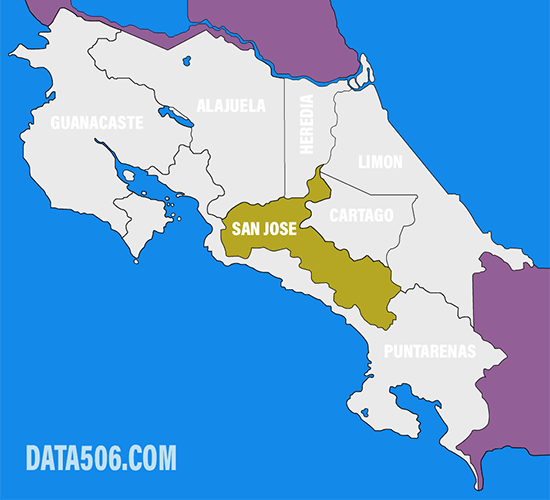
Tourism intensity: moderate, not a leisure destination, but unavoidable logistically.
Weather/terrain: Mild, spring-like climate year-round due to elevation, with cooler evenings.
Traveler relevance: Main airport access, major bus terminals, cultural reference point, and a practical place to prepare before heading elsewhere. Expect heavy traffic and apply the same situational awareness you would use in any capital city.
San José is not usually what visitors come to Costa Rica to experience first, and that is reasonable. However, brief exposure often provides context beyond natural landscapes. The quality of the experience depends heavily on local orientation and time management. With guidance, it can be worthwhile.
Most extended stays here are business-driven. Accommodation ranges from business hotels to smaller lodges, and the metropolitan area offers broad restaurant variety, casinos, and entertainment. Greater San José is dispersed rather than compact; navigating between districts takes time. For travellers focused primarily on biodiversity, beaches, or mountains, prioritization of time is essential.
HEREDIA
Heredia is the smallest province and lies about 11 kilometres north of the capital, integrated into the metropolitan region while transitioning quickly into rural and mountainous terrain.
Tourism intensity: Low. Infrastructure exists, but visitor flows are modest and primarily domestic or specialized.
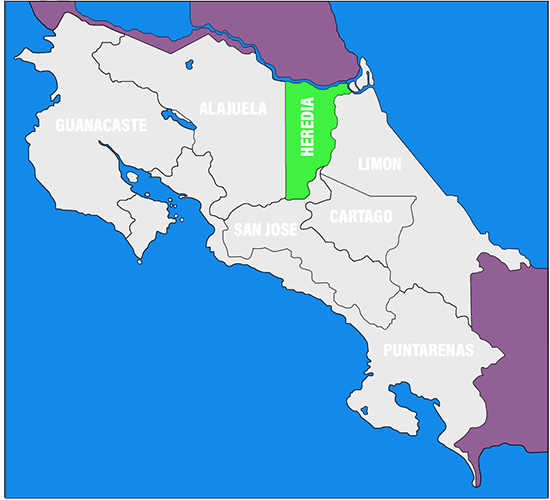
Weather/terrain: Green, mountainous, and humid overall, with cooler temperatures at higher elevations and milder conditions closer to the valley.
Traveler relevance: Suitable for short excursions from San José. Coffee cultivation is culturally significant here, and plantation visits are representative experiences. Hiking around Barva Volcano and exploring rainforest reserves are accessible options. While not a priority destination for most first-time visitors, it provides a grounded and less curated perspective of everyday Costa Rican environments.
CARTAGO
Cartago served as Costa Rica’s capital until the early 19th century and remains centrally located within the country. The province blends historical identity with agricultural valleys and mountainous landscapes.
Tourism intensity: Low to moderate. Visitors are steady but largely domestic or purpose-driven.
Weather/terrain: Cooler and frequently misty due to elevation, shaped by both the Cordillera Central and Cordillera de Talamanca mountain ranges.
Traveler relevance: Cartago offers historical and environmental depth within short distance of the capital. Key points include Irazú Volcano, the Orosi Valley, and the Basílica de Nuestra Señora de los Ángeles, an important pilgrimage site. The Pacuare and Reventazón rivers run through the province, contributing to rafting activity and scenic valleys. It works well for day trips or short stays focused on landscape or heritage rather than resort tourism.
ALAJUELA
Alajuela is one of the most populated provinces and a major agricultural contributor, particularly in coffee production. It also hosts the country’s primary international airport.
Tourism intensity: High in specific zones (Arenal region), lower elsewhere.
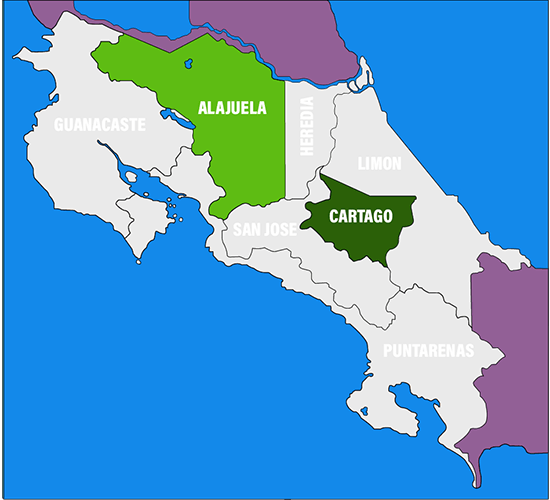
Weather/terrain: Varied — warmer and more humid in lowlands, cooler in mountainous regions.
Traveler relevance: Home to major natural attractions including Poás Volcano and the Arenal Volcano area, known for hot springs, waterfalls, and outdoor activities. Infrastructure supporting visitors is well developed. For many travellers this province becomes a central component of nature-oriented itineraries.
PUNTARENAS
Puntarenas covers a large portion of Costa Rica’s Pacific coastline and includes diverse coastal and inland environments.
Tourism intensity: Moderate to high, dispersed geographically.
Weather/terrain: Coastal humidity with warmer temperatures; cooler cloud-forest conditions inland.
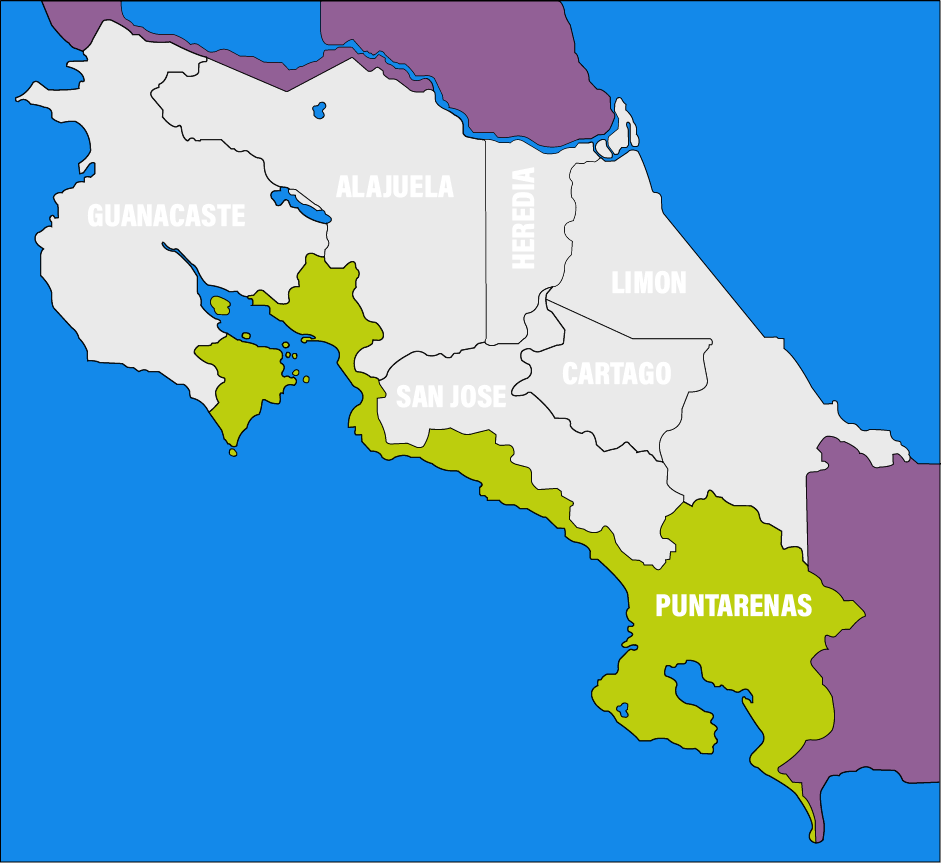
Traveler relevance: Offers strong biodiversity and beach access across multiple regions. Manuel Antonio National Park, Jacó, Playa Hermosa, and surrounding coastal towns attract international surf and leisure tourism. Farther south, the Osa Peninsula, Drake Bay, and Corcovado National Park represent some of the country’s most ecologically dense areas. Distances and travel times can be significant, so logistical planning matters.
guanacaste
Guanacaste lies in the northwest along the Pacific coast, bordering Nicaragua. It is the hottest and driest province in Costa Rica.
Tourism intensity: High along coastal zones.
Weather/terrain: Dry tropical climate with pronounced dry season and higher temperatures than most of the country.
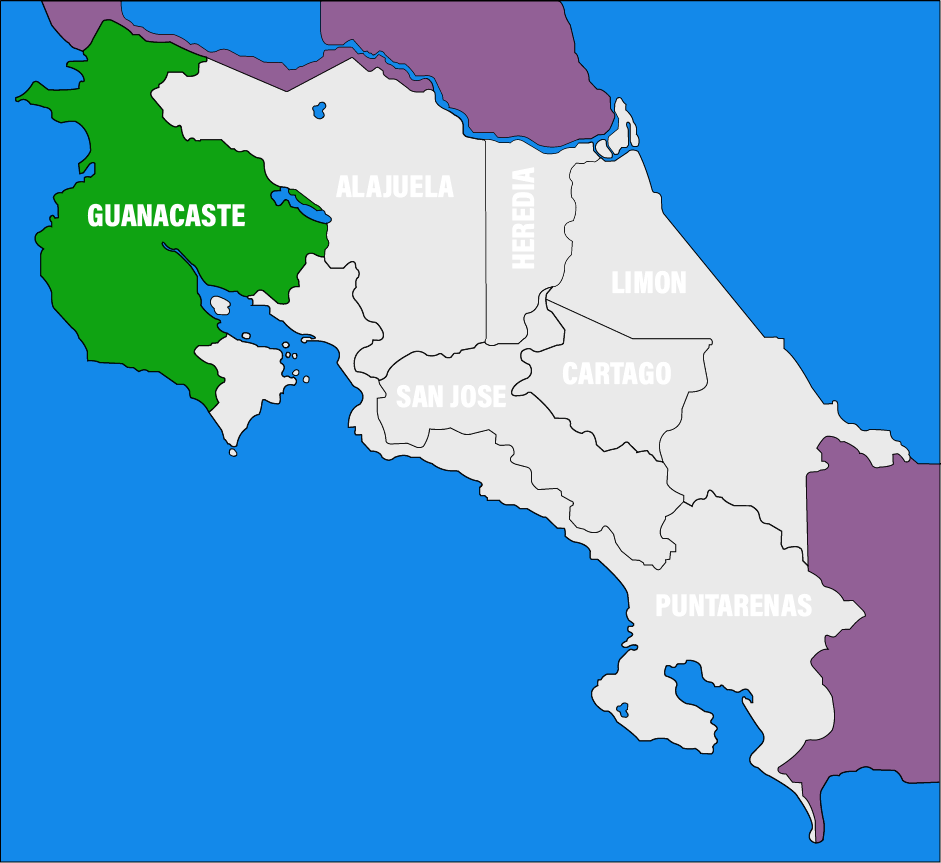
Traveler relevance: Known primarily for beaches and resort infrastructure, with access through Liberia’s international airport. Frequently visited locations include Playa Avellanas, Grande, Langosta, Tamarindo, Coco, Flamingo, and Sámara. Climate predictability and established tourism services make this region a common entry point for leisure travellers seeking coastal environments.
limón
Limón encompasses Costa Rica’s entire Caribbean coastline and presents a cultural and environmental contrast to the Pacific provinces. The region reflects Afro-Caribbean influence in cuisine, music, and community life, giving it a distinct identity within the country.
Tourism intensity: Moderate and niche-driven. Visitor flow is steady but less concentrated than Pacific resort zones.
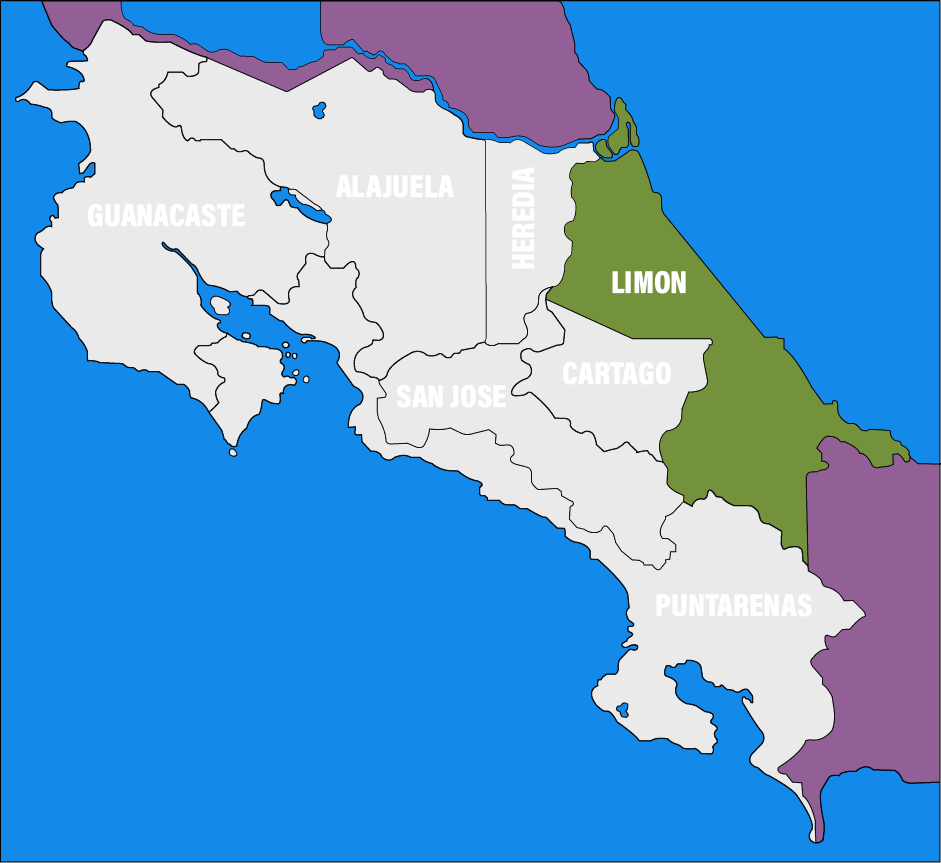
Weather/terrain: Humid tropical climate with rainfall patterns that differ from the Pacific side. Vegetation is dense and coastal conditions are warmer and more moisture-heavy year-round.
Traveler relevance: Puerto Limón functions as the principal Caribbean port and lies roughly 152 km from San José via Route 32. Beyond logistics, the province’s primary draw is coastal experience combined with protected nature.
Key coastal destinations include Cahuita, known for its national park and coral reef shoreline, and Puerto Viejo de Talamanca, which serves as the main tourism base for nearby beaches such as Playa Cocles, Playa Chiquita, and Punta Uva. These locations are recognized for relaxed pacing, wildlife presence, and varied swimming or surf conditions rather than large-scale resort infrastructure.
Further south, Gandoca-Manzanillo offers quieter coastal environments and biodiversity-focused exploration. Visitors should note that infrastructure standards vary, distances can take longer than expected, and travel planning benefits from realistic timing assumptions.